
What is coming for 6G?

The development of intelligent applications based on IoT has paved the way for the evolution of existing wireless networks. These emerging IoT services include Extended Reality or XR, brain-computer interfaces, autonomous vehicles, flying vehicles, and haptic systems [1]. These services require high data speeds, ultra-high reliability, high mobility, and long-distance communications.
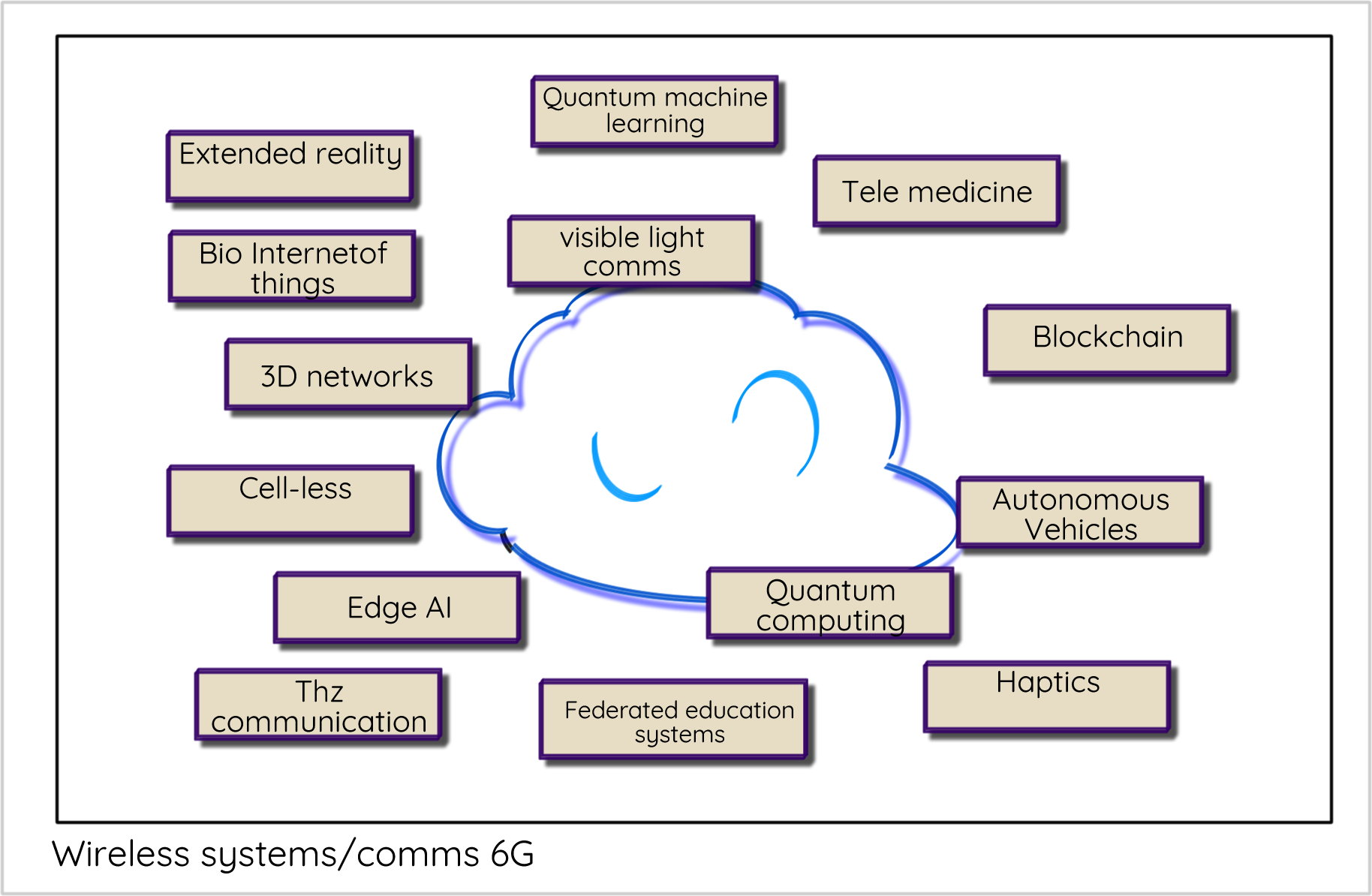
Fifth generation (5G) wireless networks are designed to allow a wide variety of intelligent services based on IoT, however, the development of different automated processes, focused on data, shows that the capabilities defined in 5G will be exceeded [2]
There are applications and services that were designed around the need to transmit a large amount of data, high reliability and speed (long data blocks). These requirements are not yet met by the recently released 5G (Based on sending short packets, short distance known as Ultra Reliable Low Latency Communication or URLLC).
The next generation of Smart Industries, for example Haptic, telemedicine and autonomous vehicles, holographic teleportation, will require microsecond level latency and Tbps level data rates
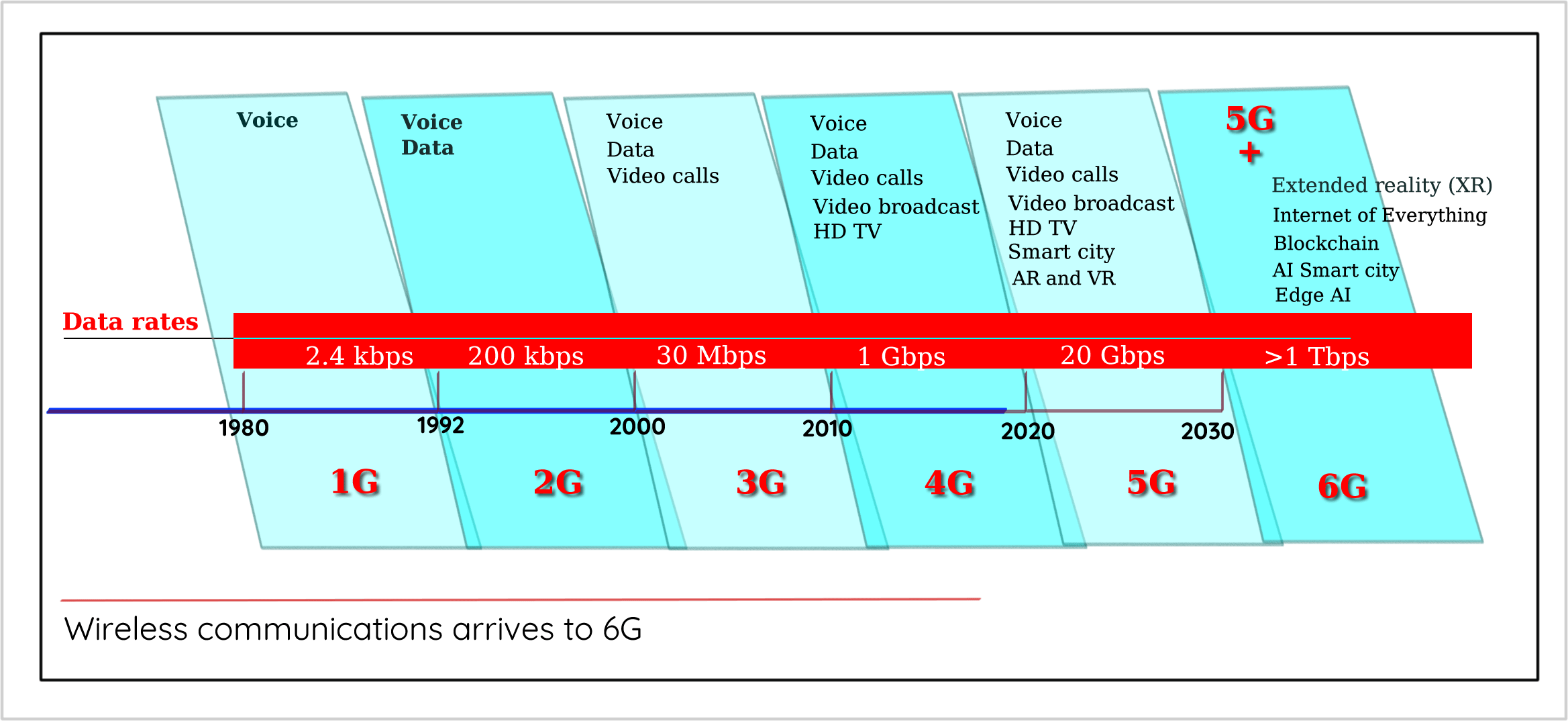
Wireless communication technologies are being driven by these new industries, but mainly by what is currently known as "Machine Learning" (ML) as it is expected to be the point of convergence of various 'smart' technologies, not only providing intelligent applications, but also access control schemes to the medium, to reach large data centers (Big Data), without leaving the end user 'hanging'.
New technology
In short, the new 6G systems will need terahertz communications, quantum communications, visible light communication (VLC), 3D wireless communications, nanoscale communications and holographic communications. All this technology is under development. Let's wait 10 years.
References
[1] K. B. Letaief, W. Chen, Y. Shi, J. Zhang, and Y.-J. A. Zhang, "The roadmap to 6G: Ai empowered wireless networks" IEEE Communications Magazine, vol. 57, no. 8, pp. 84–90, August 2019.
[2] M. Giordani, M. Polese, M. Mezzavilla, S. Rangan, and M. Zorzi, “Toward 6G networks: Use cases and technologies,” IEEE Communications Magazine, vol. 58, no. 3, pp. 55–61, March 2020.