
all started with a point

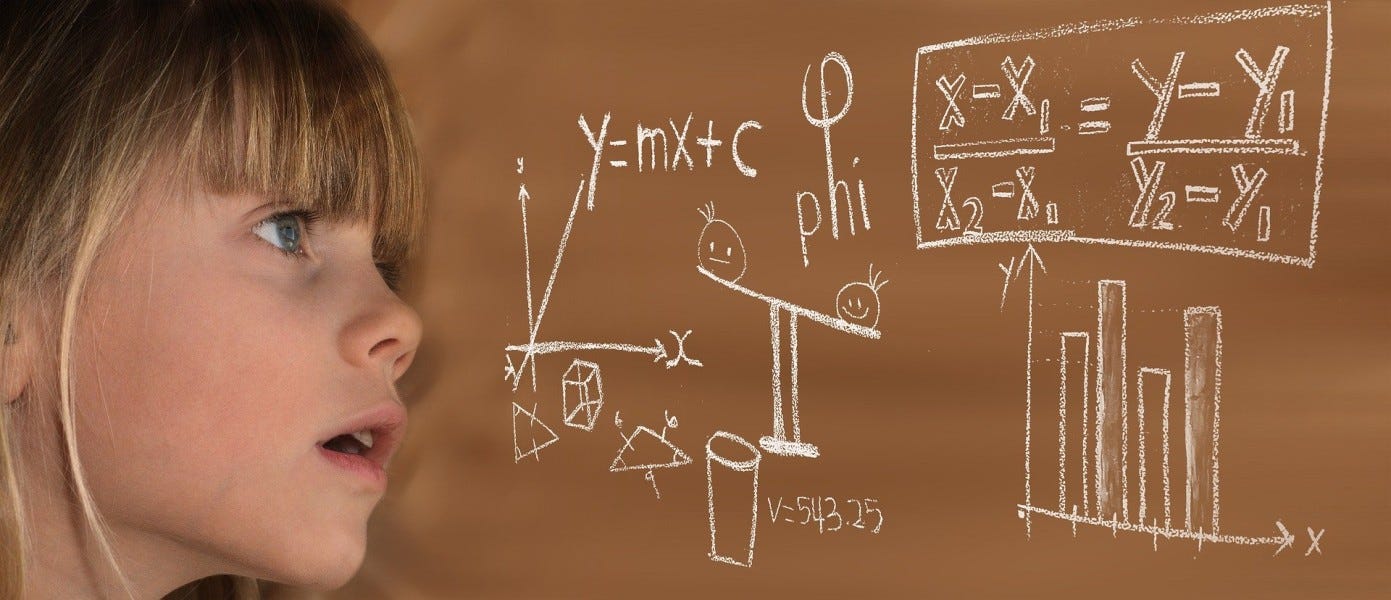
In our physical world it does not exist The Point, The Line, or The Plane, nor does the circumference and many other figures that we use today. All these abstract mental constructions have made our society work and it would not function without them, however, they are abstractions of a reality that — we humans — have invented to make it easier for us to understand what surrounds us.
The Elements (The context)
Euclid, the most prominent Greco-Roman mathematician, lived in Alexandria, Egypt, 300 years before the Christian era, compiled from a series of earlier works by other scholars who preceded him by several hundred years, a treatise of 13 books which he called The Elements . The immense impact of The Elements in the sciences —architecture, astronomy, physics, among others— is visible through the years to the present day and they have endured, as an integral part of the heritage of human culture, all these centuries thanks to the outreach done by other mathematicians who continued to share it, until you got to school.
Many call Euclid, 'The father of geometry', and the geometry that he disclosed, Euclidean Geometry because his work is the basis for the Geometry of the elemental plane.
In the first of the 13 books, Euclid began with 23 abstract definitions , including the following:
A point is what has no part
a line is a length without amplitude
A surface is that which has only length and width.
And from The Point , the line, the plane, the circumference are shaped and ... then the planet became spherical and Einstein described a relative universe and discovered that both mass and energy are the same thing.
Is mass the same as energy?
Hey wait. This is not about losing weight. This is about the dissemination of knowledge.
Those who work with mathematics and must present it to a non-mathematical audience , as Euclid and Einstein must have done in their times, with very few people who understood them, must be creative to make it known in a simple and clear way, and use equations that most of the interested public can understand, just as a high school student with basic knowledge would.
So how do researchers make the public understand their work?
Most researchers do not present their findings directly to the general public. According to the American Mathematical Society there are a little more than 50,000 research mathematicians in the world , who publish a million pages of new mathematics, new discoveries, new solutions, every year.
Difficult situation
Throughout history, thinking differently has been the reason for prison, exile, social exclusion and even death. Imagine a world in which it is blindly believed that the earth is flat and you come up with your great idea that it is a sphere and that, to finish, it revolves around the sun. Bang!
Einstein stood on two fronts: he wrote clear and refined equations — for his scientific peers — as if creating a sculpture, and on the other hand, he devised very simple visual examples to explain, with crystal clarity, his findings to the general public.
Scientific dissemination: Scientific Journalism and Popular Science
Today, there is Scientific Journalism whose purpose is to present detailed and accurate information about what is being produced in the scientific field without softening the jargon attached to the specialty of what is published. These publications are presented in such a "way" that the non-scientific consumer can understand and appreciate.
On the other hand there are the publications known as 'Popular Science' which are interpretations of science for a more general public. The Scientific Journalism tends to focus on recent scientific developments, however publications Popular Science has a wider range.
Scientific popularization, finally, is the amalgam between the general non-specialized public and specialists who are looking for solutions in this chaotic world. And if we compare with a few hundred years ago, when you were hung upside down for saying that the earth was not the center of the universe, we are doing well.
Today science is widely accepted, it can be said.
Readings / references
The thirteen books of euclid's Elements, translation of the heiberg text, with introduction and comments by TL Heath, CB, Sc. D., Cambridge, at the University Press 1968. The complete work of the 13 books, today in the public domain.
https://www.math.ubc.ca/~cass/Euclid/
https://mathcs.clarku.edu/~djoyce/java/elements/bookII/propII5.html
American Mathematical Society: https://www.ams.org
Information about Euclid and his work in en encyclopedia Britannica: https://www.britannica.com/biography/Euclid-Greek-mathematician