
Nanosatellites and the conquest of space

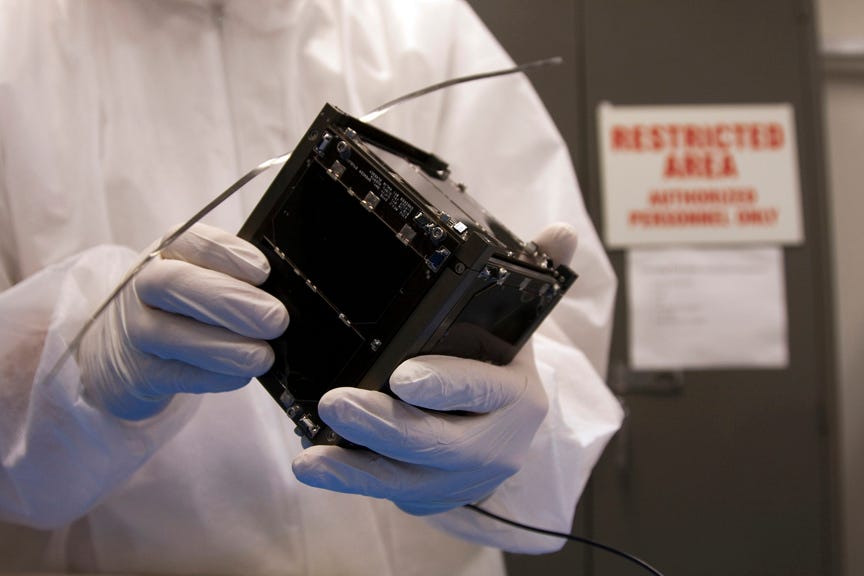
At the dawn of the space age, due to the limitations of launchers, nanosatellites were born — weighing between 1 and 10 kg unlike their larger siblings who weigh more than 500 kg. In the last two decades, the capabilities of nanosatellites have been driven by scientific and commercial innovation, consequently, numerous academic, commercial, governmental and hobbyist entities, are undertaking projects around the world.
It is generally accepted that small satellites are those with a weight of 500 kg or less, these have existed for more than half a century, but it is in the last twenty years that, thanks to the initiative of universities [1] [a], it has increased interest in pico and nanosatellites.
The takeoff of the CubeSats
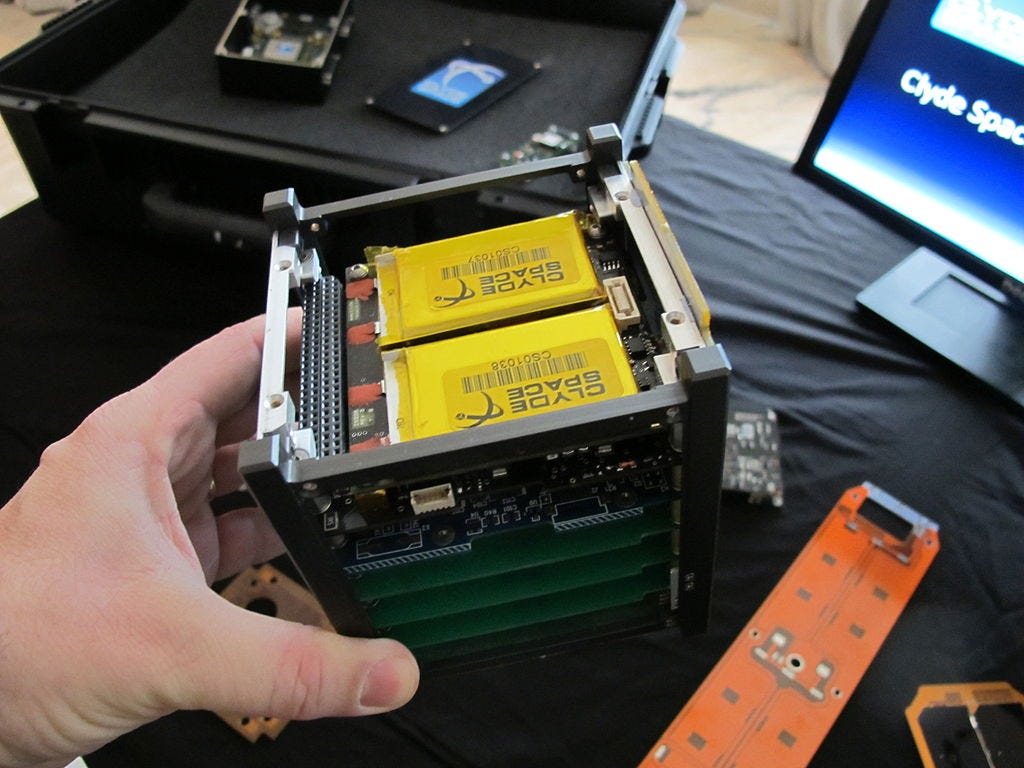
In 1999, in a collaborative effort between Prof. Jordi Puig-Suari of the State Polytechnic University of California (Cal Poly) and Prof. Bob Twiggs, of the Space Systems Development Laboratory (SSDL) of Stanford University, gave rise to the CubeSat, a 10 cm cube basically containing a radio, solar panels, a transmitter and a temperature meter. This simplified design allows multiple cubes to be combined to form larger systems. Like playing with legos.
The original intention of the project was for the students to have a complete view of the process of taking a spacecraft - in this case a satellite - into space, but progress was made more than expected when the students added other components, and the CubeSat - eventually- -Significantly reduced the costs of playing with technology in space by bridging the imagination of many.
Besides the size, what is there?
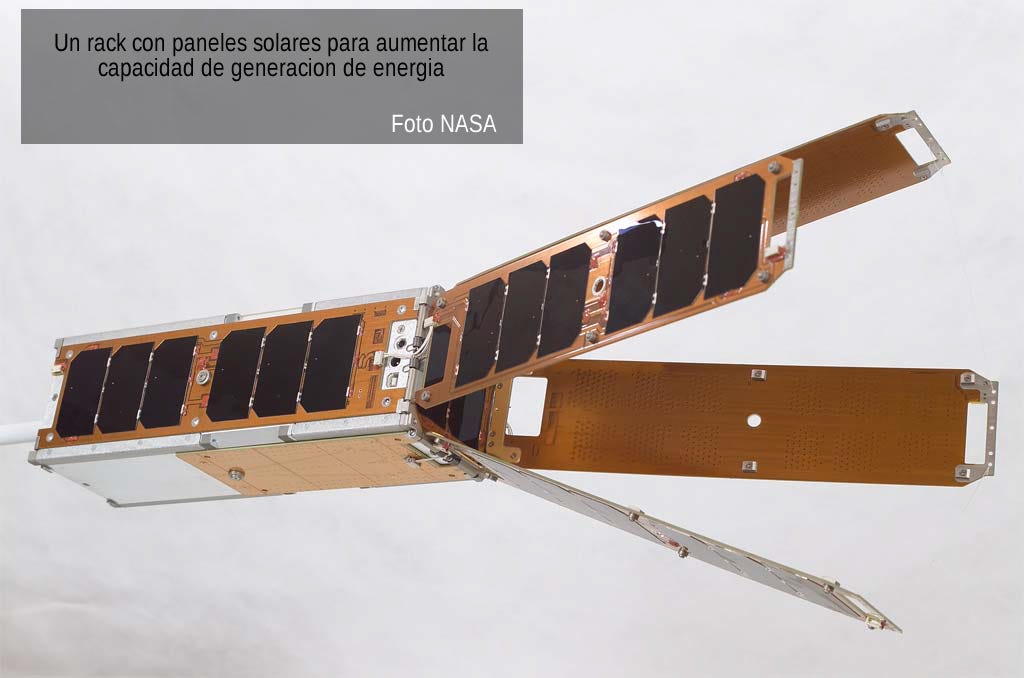
Nanosatellites do not have the same lifespan as their big brothers, the technology is still 'green' and many will burn out there, but they are like Lego pieces and they are cheaper. However, the most important thing is that until now, producing satellites was something expensive and sophisticated within the reach of only a few governments, so many laws will have to change, the technology will mature and we will keep trying.
Technical details of the design of a nanosatellite (In - more or less - human)
A satellite is a computer, as is your smartphone, but with fewer 'apps'.
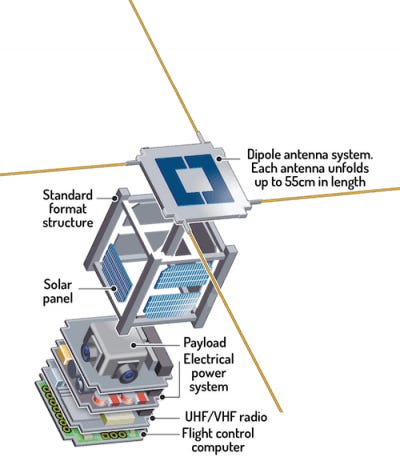
In fact, a nanosatellite can be compared to the Internet servers of the early days. At the dawn of the Internet, to publish a website you had to contract a dedicated line with an Internet Service Provider (ISP), a more or less decent server, software to manage the web service, then create and maintain the site Web. Nowadays you only pay the monthly accommodation and you focus on yours.
But if we compare a laptop with a nanosatellite - in addition to the superior capabilities offered in laptops on the market, the main difference is that the nanosatellite must have special protection that protects them from the environment in outer space (speed , heat, cold and possible shocks, radiation), the additional hardware related to the activity to which it was dedicated and the software to operate the satellite (the main computer runs on a light version of Linux, unless the designer thinks of another operating system).
Ultimately, a satellite is a computer — or network of computers — flying through space.
The thrill of the road ...
These satellites are opening the door for adventurers, pioneers and students with a real opportunity to dream, innovate, get to space, carry out the space experiment to success, and make operational failure a learning success. We have the opportunity to experiment and fail, but to make great advances in technology.
The most exciting part is that we cannot predict where access to space will take us
"Mission control ... we have an astronaut on board ..."
-. Ready for take off
-Ahead
----
References
[1] In 1999, California State Polytechnic University and Stanford University developed the CubeSat specifications to promote and develop the skills necessary for the design, manufacture and testing of small satellites intended for low Earth orbit (LEO) that perform a series of scientific functions research functions and exploration of new space technologies. The academy accounted for the majority of CubeSat launches until 2013, when more than half of the launches were for non-academic purposes, and in 2014 the majority of the recently implemented CubeSats were for hobby or commercial projects.
Documents
[a] CubeSat Design Proposal: https://static1.squarespace.com/static/5418c831e4b0fa4ecac1bacd/t/56e9b62337013b6c063a655a/1458157095454/cds_rev13_final2.pdf.
Links