
Intelligence

Throughout the history of modern society we have extensively discussed What is intelligence? and What is consciousness? However, after hundreds of years, neither science nor philosophy has given a definitive answer.
From the dictionary
According to the British encyclopedia, Human intelligence, it is the mental quality that consists of the abilities to learn from experience, adapt to new situations, understand and handle abstract concepts and use knowledge to manipulate the environment.
Basic general framework
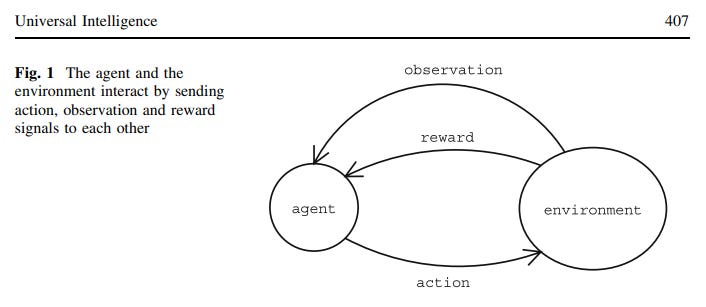
Shane Legg and Marcus Hutter, in their publication "Universal Intelligence: A Definition of Machine Intelligence", provide us with the following definition:
"Intelligence measures the ability of an agent to achieve objectives in a wide range of environments."
Different approaches
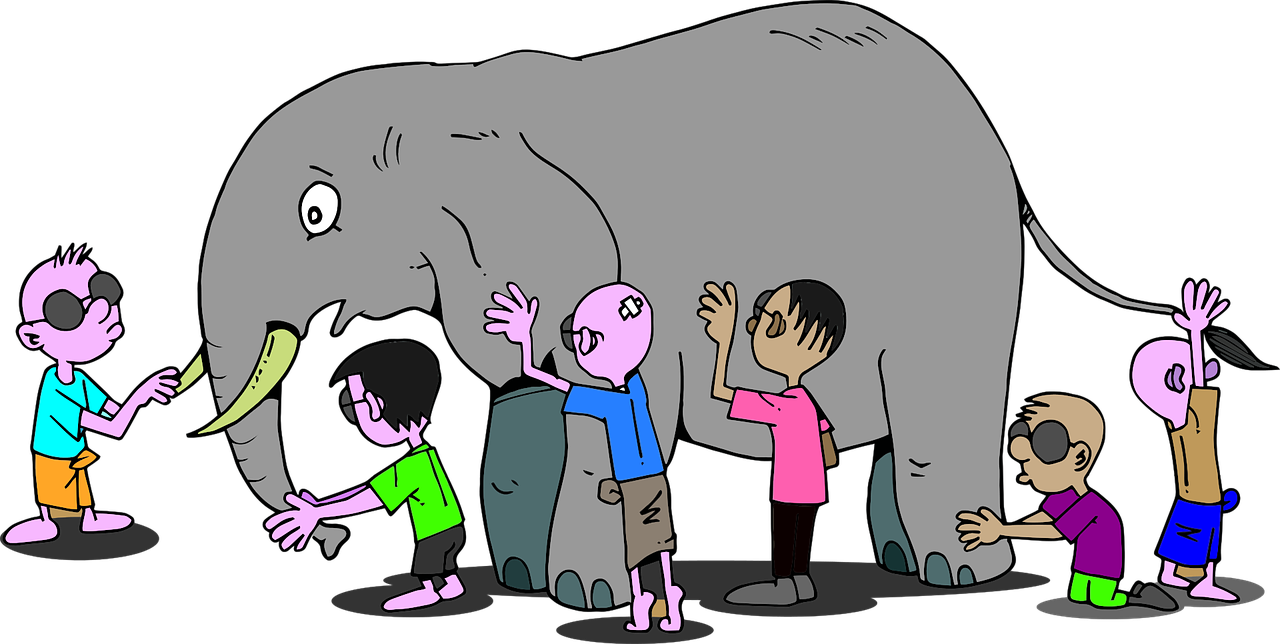
Some scholars argue that humans are driven by rationality and that animals are driven by instinct [1], others describe approaches to cultural intelligence [2] and there are those who apply evolutionary theories to explain that general intelligence can be found in non-human animals [3]. There are also examples of intelligence in unicellular organisms and plants, in most cases without the need for a brain [5].
Do we build intelligence?
The everyday and recurring problems of mere existence were solved long ago by our pre-human ancestors. Today we can sit down for a cup of coffee without much effort, wake up in the morning, cook and have our breakfast, swallow and digest it, without making the slightest use of any intelligence or intellect, we simply employ inherited habits— "instincts" and "reflexes. ".
We could spend the whole day solving problem after problem, many difficult enough, others possibly beyond the competence of the majority and can only be executed by experts or better informed people; But rarely will a new problem arise that takes us out of the comfortable routine of a well-ordered existence.
In the end, civilization, through the school model, shows the student how to solve problems — instead of him solving them himself — and the exercise of his intelligence becomes unnecessary.
Is intelligence, and consequently the so-called General Intelligence, a human construction?
Do we build intelligence?
Intelligence tests on humans
Many types of tests exist and are applied for the purpose of measuring human intelligence; Psychologists believe that common intelligence tests, called IQ tests, can reliably measure something in humans. In fact, many of these tests are statistically reliable and are a good predictor of various things, such as academic performance, memory, pattern recognition, among others. However, the question is not whether they are useful or not, but rather whether what they measure is in fact '' intelligence '' (Although many of them are called 'Intelligence Tests'). Many experts think that they only manage to measure certain aspects or types of intelligence (this criterion is known as the Theory of multiple intelligences [6]).
Intelligence tests in animals.
The human interest in animal intelligence allows us to test the bias in our concepts, due to language differences, physical ability or disability, when we compare, for example, capacities to understand and perceive (cognition and perception) in animals. Still, establishing a general method for a measurement can be a daunting task, and the validation of such a test cannot always be assured. For example, by measuring 'IQ' in children, a test could be validated for the ability to predict academic success. But let's say that the metric is survival, a lot of single-celled organisms and bacteria would be geniuses.
Biases in animal intelligence test
When testing animal intelligence we cannot explain to the animal its objective, we have to guide it towards the problem by rewarding its behavior, often with food. In the end, 'solve the task' and learn 'what the task is', they get confused and the interpretation of the results of a test could be biased [7].
Criteria for determining if a thing is smart
If we had a criterion that gives us the practical ability to determine whether or not a specific 'thing' could be included in intelligent things, of course, we will avoid the worry of filling that space in the dictionary with a theory of intelligence. The only thing we would do would be to choose a criterion, from those proposed, and say: 'yes, it is an intelligence'.
Properties of an Intelligence Test for humans
An intelligence test, like most tests conducted to learn about other phenomena, should to have certain characteristics
It should be able to be replicated using the same criteria from the first test.
It must be consistent over time (And here we find the first difficulty that, in some types of test, it can only be met if the test subject does not learn anything new)
The subject applying the test must not introduce biases that alter the results. A written test, for example, introduces minimal interaction, but the lack of interaction can also introduce biases, for example, cultural differences, communication problems due to language interpretation or intentionality, or for example, problems as simple as a earache may not be clearly identified and cause bias. Furthermore, to avoid bias in a written test, it should be administered by a person who has more knowledge than the individual under test.
There are many other factors that would end up skewing a human intelligence test, but, I'm afraid, it's a high-volume topic.
Something that we can assure is that for an intelligence test to be valid as such, it must measure intelligence and, one way of verification is that said test produces results consistent with any other manifestation of intelligence.
if a third party cannot distinguish between human and machine responses, it could be used to empirically determine whether or not a machine possesses intelligence
Turing test
In fact, several general tests have been proposed and one of them, among the most famous, is that devised by Alan Turing (1950). The test is known as an 'imitation game' and raises the idea of putting two contestants behind a curtain, let's say a man and a woman, to whom a third party asks questions trying to guess which is the woman and which is the man. . The contestants, meanwhile, will try their best not to reveal their gender or provide a clue so that the third contestant can guess.
Turing proposes that this test, pitting a machine against a human, and if a third party cannot distinguish between the responses of the human and the machine, could be used to empirically determine whether or not a machine possesses intelligence, that is, the criterion would be its ability. to deceive the third party.
The chinese room
Turing's proposal remained unchallenged for a long time, until John Searle (1980) offered the argument of 'The Chinese Room' as a counterexample that undermined the plausibility of the Turing test.
Imagine that someone is locked in a room that has only one opening - say a window - through which he receives a list of Chinese characters (an input) and, in response, sends other, or the same Chinese symbols (an output ). In other words, a 'black box' that speaks Chinese. However, it turns out that the person inside the room knows nothing of Chinese, he only has in his possession an instruction book (in his language) that tells him which characters to respond with given an entry and, by acting in accordance with the instructions, you can fool any observer into thinking you understand Chinese.
The korean room
Rappaport (1988), seeking to redress the damage caused by the Chinese room argument, introduces a variant that attempts to show that Searle is less conclusive than he initially appears. He proposes the scenario of a Korean teacher who is an authority on Shakespeare, but does not know the English language, and who, when he is consulted, in English, for Shakespeare's plays, he fails in the answers, because the instructions are not there. in Korean.
The external observer would wrongly infer that the system — the Korean teacher in the room — does not understand something or there is no display of intelligence.
Rappaport concludes that, a computer, to pass the Turing test, and by extension demonstrate the condition of 'intelligence', would have to understand the natural language with which the human communicates in the test.
_______o0o_________
In my opinion, the fact that an organism, a thing or an agent, must have the capacity of language to show intelligence is a point that invites controversy. If not, ask anyone who has a pet, a dog, a cat, a crow, or a carrot.
Artificial General Intelligence
There is no doubt that it would be very useful to have an algorithm to recognize intelligence and to provide inputs so that other researchers can review the evidence and reach their own conclusions. Science has failed to establish a definition of intelligence.
The definitions of intelligence are many and, until a few years ago, when the idea of Artificial Intelligence began - followed by the idea of building a General Artificial Intelligence (which is nothing more than a digital human mind) - what people had in mind was the emulation of the human brain's abilities to perform tasks.
Conscience
Understanding intelligence is not easy, consciousness is even worse.
Will we have an Artificial General Intelligence (AIG) soon?
The reason why we still do not know how to build a General Artificial Intelligence is, in part, because we still do not know, exactly, the complexity of the problem to model it. There are many approaches that reflect different ideas about the same goal, from multiple tools to superhuman AI, and we do not know if we are going in the right direction.
There is motivating progress in Artificial Intelligence but there is no obvious progress to indicate that we will soon have the first General Artificial Intelligence.
References
[1] Pinker, S. (2010). The cognitive niche: Coevolution of intelligence, sociality, and language. Proceedings of the National Academy of Sciences, 107, 8893-8999.
[2] Tomasello, M. (2014), Michael Tomasello. Eur. J. Soc. Psychol., 44: 187-194. https://doi.org/10.1002/ejsp.2015
[3] Schubiger, M. N., Fichtel, C., & Burkart, J. M. (2020). Validity of Cognitive Tests for Nonhuman Animals: Pitfalls and Prospects. Frontiers in Psychology, 11, 1835.
[4] Legg, S., Hutter, M. Universal Intelligence: A Definition of Machine Intelligence. Minds & Machines 17, 391–444 (2007). https://doi.org/10.1007/s11023-007-9079-x
[5] Nakagaki, T., Yamada, H. & Tóth, Á. Maze-solving by an amoeboid organism. Nature 407, 470 (2000). https://doi.org/10.1038/35035159
[6] Gardner, howard., Frame of Minds, The Theory of Multiple Intelligences, 1993, Published by Basic Books, A Member of the Perseus Books Group
[7] Zentall, T. R., & Smeets, P. M. (Eds.). (nineteen ninety six). Advances in psychology, No. 117, Stimulus class formation in humans and animals. Elsevier Science.